About the project
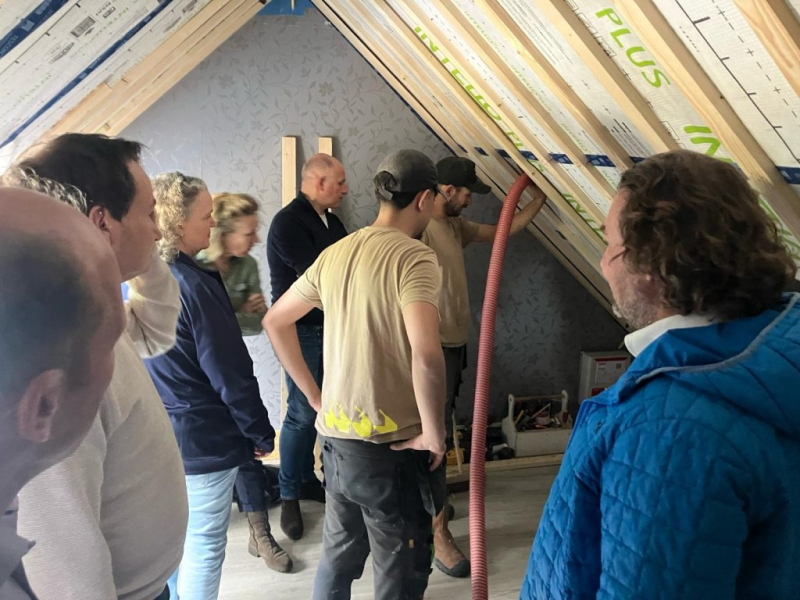
The TCAB Inblaasstro project realises long-term carbon storage by transforming Dutch wheat straw into loose-fill insulation for buildings, using straw as a biobased by-product rather than a primary crop. The production chain covers cultivation, harvesting, storage, processing and packaging of straw into inblaasstro, quantified via LCA according to EN 15804+A2 and EN 16449, with system boundaries from A1 to A3. Each cubic metre of inblaasstro with a density of 105 kg/m³ stores around 160.81 kg of biogenic CO₂, while life-cycle emissions are about 23 kg CO₂e/m³, resulting in a Net Carbon Removal Benefit of approximately 0.138 tonnes CO₂e per m³, or 1.3125 tonnes CO₂e per tonne of product.
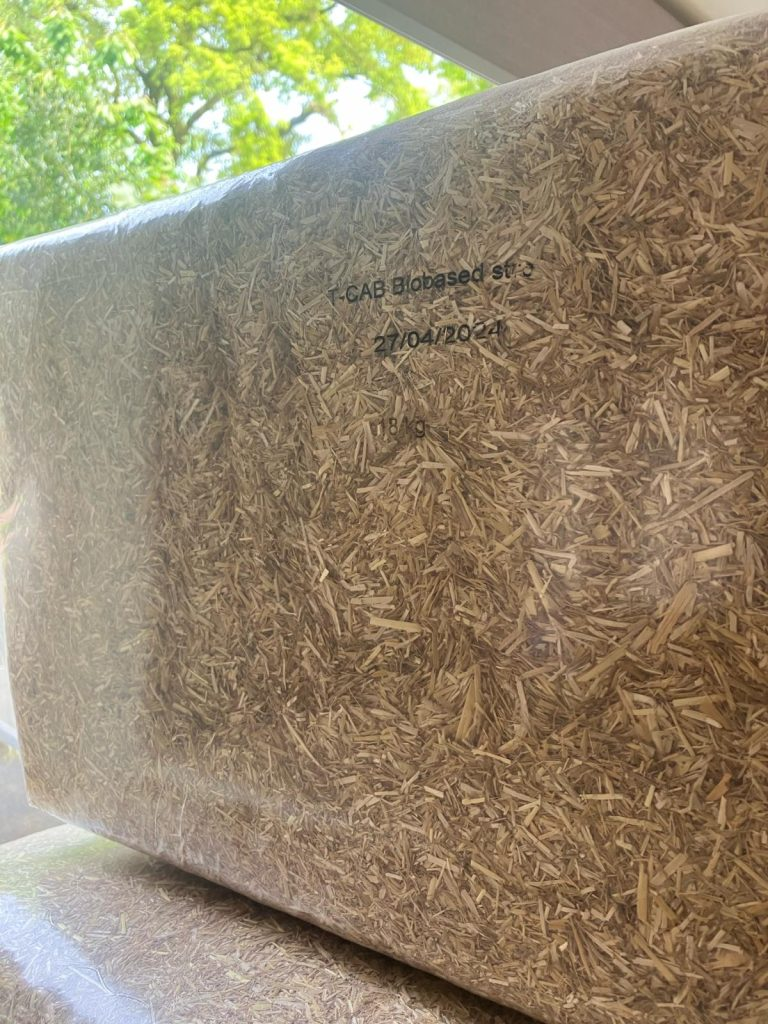
The project is designed as a continuous, scalable programme that produces up to roughly 400 tonnes of inblaasstro per year, corresponding to about 500 tonnes of CO₂ removal annually under the ONCRA methodology. Straw is sourced from arable farms in Noord-Brabant and Limburg, transported to the T‑CAB facilities for storage and onward logistics, and then processed by Verhoeven into dust-reduced, cut and bagged insulation units of 18 kg. The biogenic carbon remains locked in the insulation for at least 50 years according to the method and a minimum product lifetime of 75 years as specified in the NMD profiles and LCA, provided correct installation and protection from moisture and weathering.
Beyond climate mitigation, the project strengthens wider sustainability outcomes in the agricultural and construction systems. Wheat functions as a “rest crop” that improves soil structure, water retention and nutrient efficiency, contributing to climate adaptation, soil health and water quality. Using straw in circular, biobased construction reduces dependence on fossil-based materials, supports a circular bioeconomy, and can enhance biodiversity and ecosystem services when combined with regenerative and nature-positive farming practices.
About the remover
The remover in this project is Telerscoöperatie Agrarische Bouwprodukten U.A. (T‑CAB), a cooperative of forward-looking arable farmers in Noord‑Brabant and Limburg who jointly organise the production and marketing of biobased building materials. T‑CAB coordinates the chain from straw procurement at farm level through storage, transport and processing into inblaasstro, and then supplies the finished insulation to the construction sector. Within this cooperative structure, the ownership of the product chain and the associated carbon credits lies with T‑CAB, with specified exceptions such as a defined share of credits allocated to partners like Nationaal Groenfonds for fibre crop incentive schemes.
T‑CAB enables carbon removal by turning underutilised wheat straw into high-quality, certified insulation that stores biogenic carbon for decades in buildings. Together with partners such as VOF Koekkoek de Vink (lead farmer in fibre crop pilots) and Verhoeven Fouragehandel (processor), T‑CAB secures traceable sourcing, consistent product quality and robust LCA data. The cooperative organises the annual data collection on volumes, densities and batches of inblaasstro, as well as field-level information on areas and yields of wheat straw, linking on-farm practice to long‑term carbon storage in the built environment.
Within the ONCRA framework, T‑CAB is responsible for monitoring, reporting and verification of the Net Carbon Removal Benefit from the produced inblaasstro. Each year, T‑CAB compiles batch-level and farm-level data, supported by delivery notes, weighing tickets and contracts, and submits a progress report to ONCRA for certification. An independent verifier reviews these data, may perform on-site audits, and checks risks such as product non-use or substandard installation, ensuring that inblaasstro insulation functions as a reliable, long-lived carbon sink across the cooperative’s portfolio.