About the Project
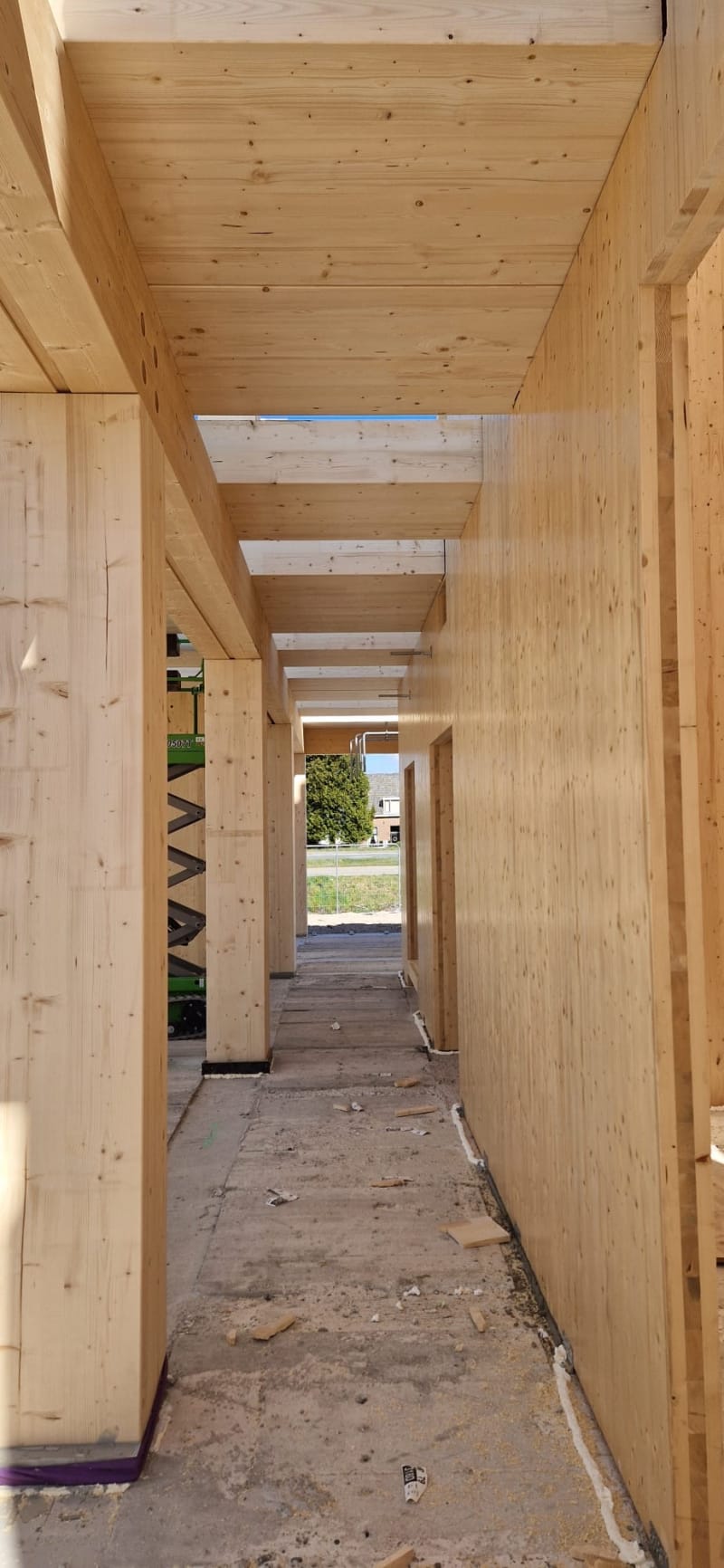
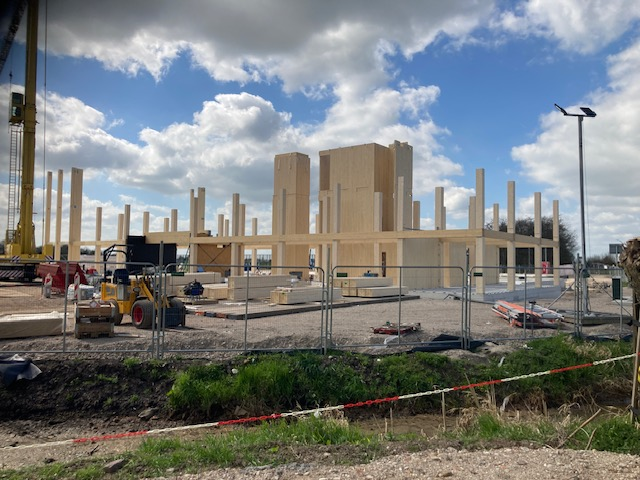
The new municipal hall of Gemeente Krimpenerwaard marks a defining moment in Dutch public architecture — a nearly fully timber-structured civic building that proves sustainability and functionality can go hand in hand. Designed to consolidate four separate municipal offices into one cohesive workplace, the building serves as both a practical solution for the organization and a living statement of the municipality's commitment to a circular, climate-adaptive future.
At the heart of the design is an extensive use of biobased materials — primarily Cross Laminated Timber (CLT) and Laminated Veneer Lumber (LVL) — used throughout the structural frame, floors, and façades. Even the interior fixtures and furnishings incorporate reclaimed wood sourced directly from residents via the municipality's own waste collection points. The result is a building that stores over 1,200 tonnes of CO₂ for a minimum of 50 years, from the moment construction is complete.
The project goes beyond carbon storage. Positioned within the historic polder landscape of Bergambacht, the building is oriented north-south to maximise natural ventilation, passive cooling, and seasonal light management. Operable windows, atrium light shafts, and summer night ventilation reduce reliance on mechanical systems, while solar panels ensure the building operates at net-zero energy. A grey water system cuts drinking water consumption, and the entire timber structure is designed to be fully demountable at end of life.
Directly behind the building, eleven hectares of new nature are being developed in Polder De Nes — a collaboration between the municipality, Waterbedrijf Dunea, and the Province of Zuid-Holland. The nature area includes woodland, species-rich grassland, wetland, and ponds designed for target species including the crested newt, marsh frog, and bat species. Between 5,700 and 6,500 trees will be planted, far exceeding the statutory replanting requirement. The municipal hall is not just a building — it is the starting point of a broader ecological transformation of its surroundings.
About the Remover
The Gemeentehuis Krimpenerwaard project is developed and owned by Gemeente Krimpenerwaard, represented by the College of Mayor and Aldermen. The municipality made a deliberate and values-driven decision to build with circular timber construction — not because it was required, but because it reflects the role a local government can play as a credible example for builders, businesses, and citizens in its region.
The carbon removal credits associated with the project are submitted and managed by the municipality itself, ensuring direct accountability for the long-term carbon storage within the biobased materials. No external subsidies or financial parties hold claims on the captured CO₂, reinforcing the additionality and integrity of the certification.
Revenue from Carbon Removal Units will be reinvested in the municipality's long-term sustainability ambitions, including the ongoing development of the new nature area and biodiversity initiatives in the surrounding landscape. Gemeente Krimpenerwaard demonstrates that public bodies can lead the transition — combining procurement power, land ownership, and civic responsibility to build in ways that store carbon, restore nature, and inspire the communities they serve.